Binance is the world’slargest cryptocurrency exchange by trading volume and is now officially launching the RavenCoin (RVN) mining service, which uses the PPS+ payment method. Mining fees for the RavenCoin (RVN) mining pool are set at just 1%. The price of RVNhas risen by nearly 10% since the announcement.
What is Ravencoin?
Ravencoin is an electronic peer-to-peer system for creating and transferring assets, designed to implement a blockchain tailored to specific use cases. It is based on a fork of the Bitcoin code. It uses the KawPow mining algorithm. If you'd like to read our beginner's guide to mining Ravencoin, clickhere.
Crypto Mining After the Ethereum Merge
Before the merge, Ethereum (ETH) was the miners' preferred option. The merge was completed in mid-September, and Ethereum switched from the proof-of-work to the proof-of-stake consensus mechanism. PoS does not require high computing power to validate transactions on the blockchain. As a result, miners’ graphics processing units (GPUs) and other mining equipment became irrelevant since they could no longer mine Ethereum.
Miners explored other PoW alternatives to Ethereum in order to continue generating revenue from their mining equipment. This led them to switch to miningEthereum Classic(ETC) and Ravencoin. As more miners switched to these alternatives, competition to mine a block intensified, and eventually, the mining difficulty increased. The mining difficulty determines how difficult it will be to mine the next block.
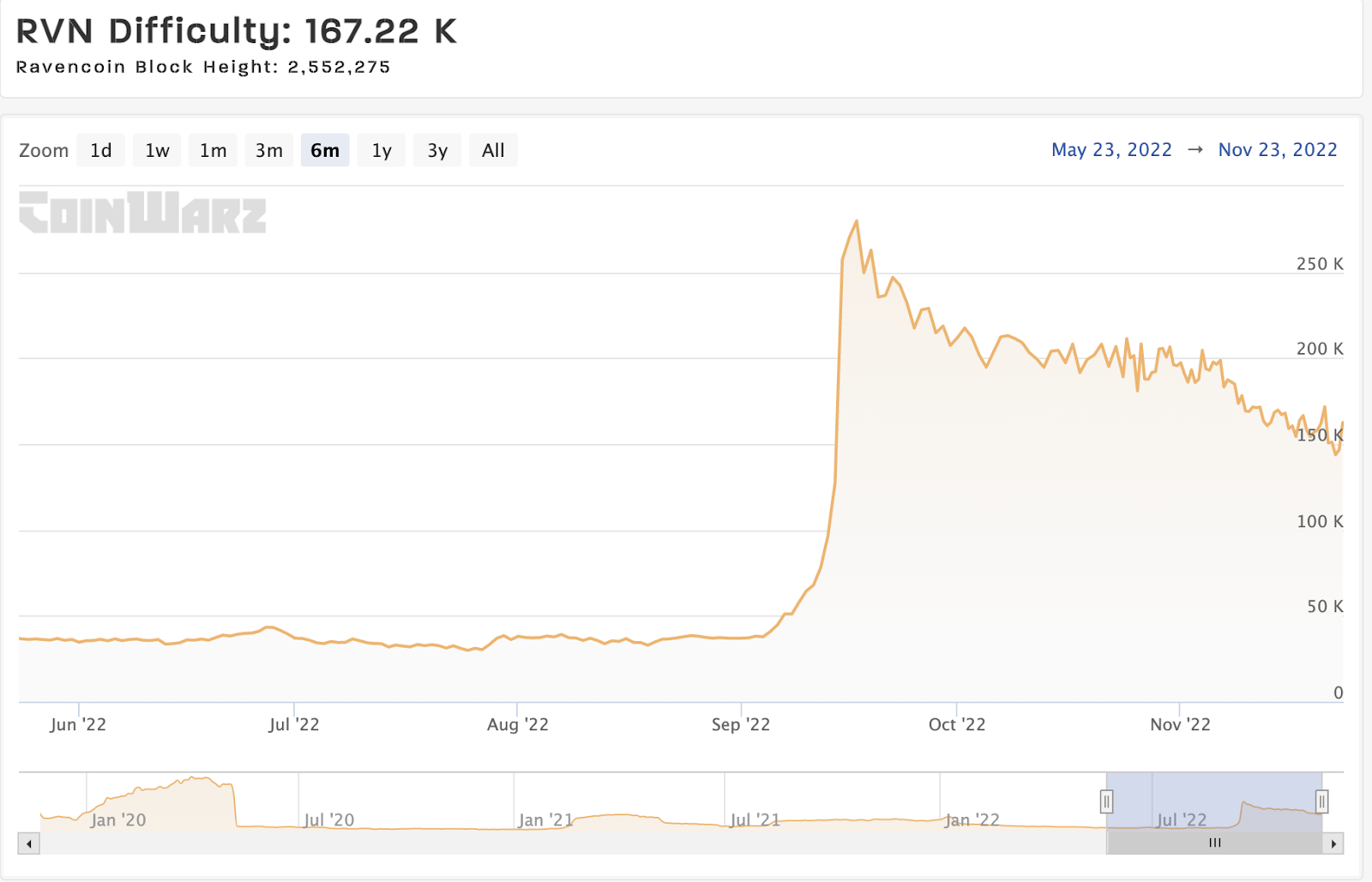
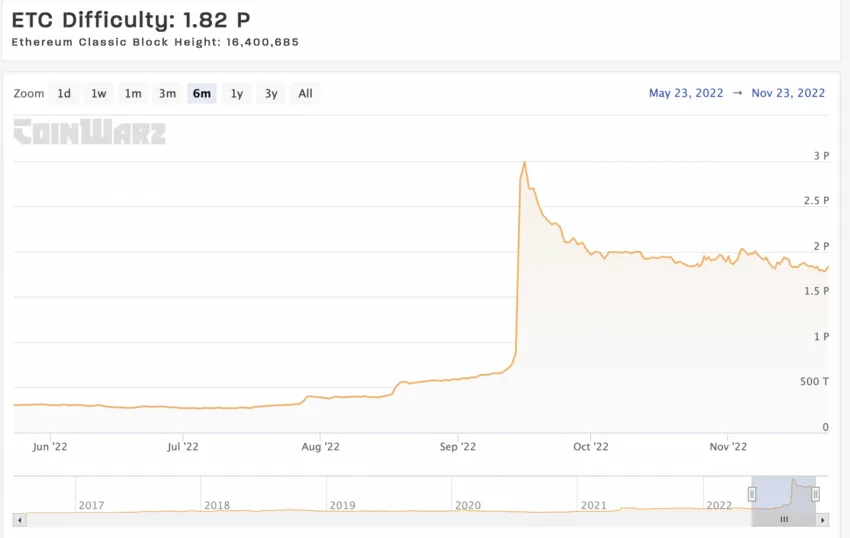
According to data fromCoinWarz, the mining difficulty of PoW alternatives ETC and RVN began to rise after mid-September. ETC's mining difficulty has nearly tripled since September.
RVN's mining difficulty increased more than sevenfold following the Ethereum merger. In early September, it was around 37,000. In mid-September, the mining difficulty peaked at 279,000.
The Ethereum Classic mining pool was already live on Binance. Today, they also launched the Ravencoin mining pool.